
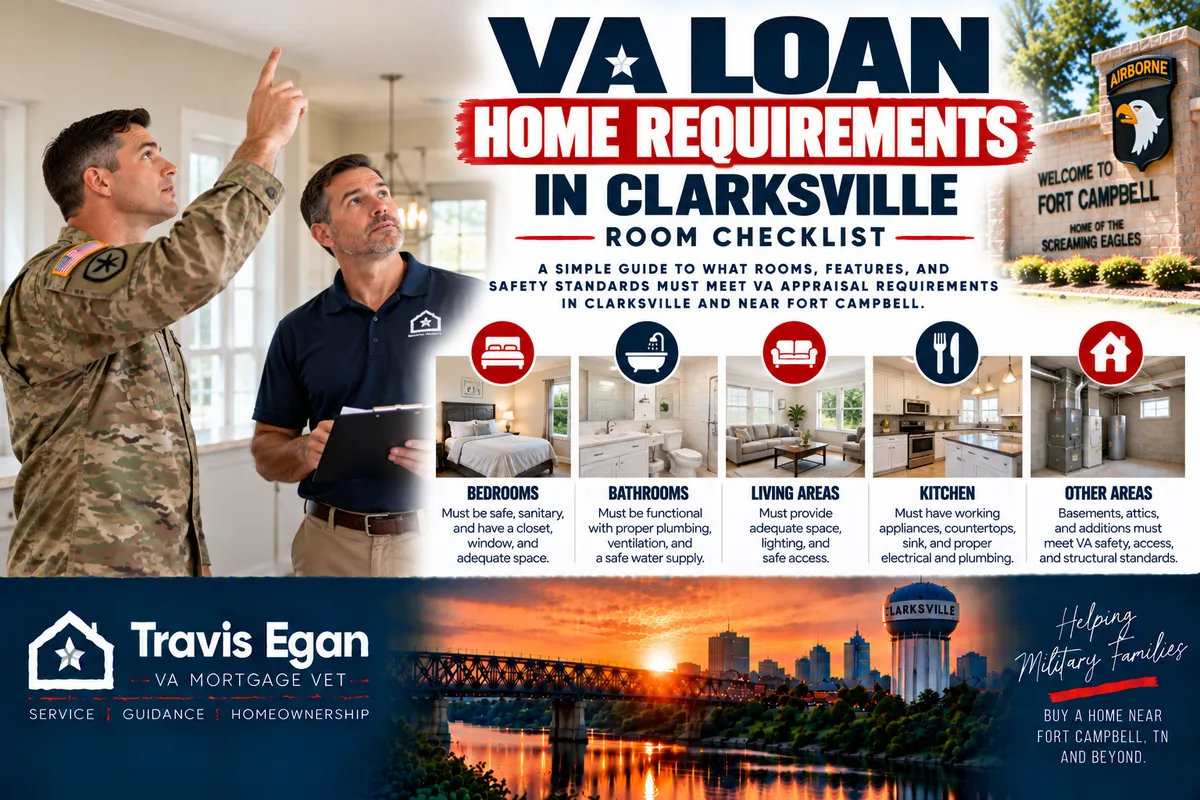
VA Loan Home Requirements in Clarksville: Room Checklist
A VA loan asks two things of a house: that it meets the VA's property standards, and that you plan to live in it. The standards are called Minimum Property Requirements, or MPRs, and the VA sums them up in three words. The home must be safe, sanitary, and structurally sound. These standards exist so veterans don't end up owning a house that drains their savings the month after closing.
In the Clarksville and Fort Campbell area, plenty of homes pass without drama. Others get flagged for a roof, a crawl space, or an outlet. Knowing what appraisers look at, room by room, helps you shop with clearer eyes and keeps a contract from stalling. Here is the walkthrough.
What the VA Is Actually Looking For
The VA's property rules start with the home type. It must be a residential dwelling of up to four units that appeals to most buyers. There is no upper limit on acreage, so a place with some land is not automatically out. What matters more is whether the property is conventional, not unique, and in good working condition.
Beyond property standards, the VA requires that you intend to occupy the home as your primary residence. Second homes and investment properties do not qualify for VA financing. On the borrower side, you need satisfactory credit, enough income to cover the expected monthly obligations, and a valid Certificate of Eligibility, or COE, to show your lender you qualify based on your service history or duty status.
One more rule shapes everything below: each living unit must have the space necessary for living quarters, sleeping quarters, and cooking and dining. A house that technically has four walls but no workable kitchen or living area will draw questions.
Appraisal Versus Inspection: Two Separate Steps
The VA doesn't require a standard home inspection, but you do need a VA appraisal, and those appraisals are typically stricter than conventional ones. The appraiser confirms value and checks the property against the MPRs. A private inspection is optional and covers much more ground, especially systems and details an appraisal will not test.
Many Clarksville buyers order both. The appraisal protects the loan. The inspection protects you and gives you a repair list to negotiate before your deadline, not after.

Room-by-Room Checklist
Use this as a walking list when you tour a home or review a listing packet with your agent. None of it replaces the appraiser's judgment, but it shows where the risks usually lie.
Roof, Siding, and Foundation
Start outside. Structural soundness and safety start at the top and bottom of the house, and these items are most likely to need attention before closing.
Roof covering intact, with no missing material, active leaks, or failed flashing.
Gutters and downspouts that move water away from the foundation
Foundation walls without significant cracking, settling, or signs of moisture intrusion
Siding, trim, and paint in reasonable condition, with no rot or open gaps
Windows and exterior doors that open, close, and latch properly
No standing water, heavy debris, or obvious hazards on the lot
Entry, Hallways, and Stairs
Common areas get heavy traffic and wear. The question here is simple: can someone move through the home safely and without damage?
Floors level, secure, and free of soft spots or tripping edges
Stairs sound underfoot, with stable treads and railings
Interior doors that operate and hardware that works
Switches and outlets with intact cover plates and no exposed wiring
Ceilings and walls free of staining that suggests a leak above
Living Room and Common Areas
The MPR space requirement starts here. The home needs usable living quarters, not a converted space that only functions as a pass-through. A working heat source and dry interior are the other two things to confirm.
Room size and layout that support normal furniture and daily use
Heating that operates and can keep the home at a reasonable temperature
Windows that open and provide light and ventilation
No water stains, musty odors, or evidence of past flooding
Bedrooms
Sleeping quarters have to be genuinely usable as bedrooms. That means the space is conditioned, you can escape in an emergency, and there are no obvious moisture problems. A room labeled a bedroom in the listing should be one you could actually sleep in.
Enough space for a bed and normal bedroom furniture
Windows that open from the inside
Heating and cooling that reach the room
No leaks, mold-like staining, or blocked access
Kitchen
Cooking and dining space is an explicit part of the VA's space requirements, and the kitchen is where sanitary conditions get tested most often. Check under the sink, behind the appliances, and anywhere that touches water.
Range or cooktop and oven that function
Sink with working hot and cold water and no leaks below
Counters and cabinets in usable condition, with doors and drawers that work
Ventilation that moves moisture and cooking exhaust
No pest activity, soft flooring, or water damage near plumbing
Bathrooms
Sanitary means the fixtures work and the room stays clean and dry. Bathrooms are the most common source of flagged items in any home, VA or otherwise.
Toilet that flushes properly and is securely mounted
Working sink and a tub or shower with hot and cold water
Ventilation through a fan or an operable window
No leaking fixtures, loose tile, or soft flooring near the tub
Caulking and grout intact enough to keep moisture out of walls and subfloor
Attic, Crawl Space, and Utility Systems
Buyers tend to skip this part of the checklist, and appraisers do not. Structural soundness and safety both trace back to these spaces.
Attic with adequate ventilation and no signs of roof leaks or pest activity
Crawl space or basement without standing water or heavy moisture
Heating and cooling equipment that operates and is safely installed
Water heater that works and is properly vented and secured
Electrical panel and visible wiring without obvious hazards
Garage, Driveway, and Lot
Outbuildings and access areas get reviewed for safety and usability too. A garage that will not open or a driveway that floods is a practical problem even when the house itself is fine.
Garage door that opens, closes, and stays put
Driveway and walkways that are passable
Drainage that moves water away from the structure
No abandoned equipment, deep debris, or unsafe structures on the property
Issues That Commonly Slow a VA Closing
Most repair requests fall into the same categories: an active roof leak or failing roof covering, water intrusion or standing water under the house, unsafe or nonfunctioning electrical components, heating or plumbing that doesn't work, and sanitary problems around fixtures. Peeling paint, missing handrails, and open junction boxes also draw attention because they read as safety issues.
If the appraiser flags something, your lender will usually require it to be corrected before closing. Get written estimates early so you can decide whether to ask the seller to repair it or move to another home.

Multi-Unit Properties and Space Requirements
A duplex, triplex, or fourplex can qualify for VA financing as long as you occupy one unit as your primary residence. Each unit must be self-contained for living, sleeping, cooking, and dining. If one unit has been gutted, combined with another, or converted to storage, expect the appraiser to raise the value.
Local Notes for Clarksville and Fort Campbell Buyers
Housing around Fort Campbell ranges widely, and older homes come with whatever the last several decades of weather and maintenance left behind. Roof age, crawl space moisture, and aging electrical work often show up, so it pays to look closely before you fall for a floor plan. PCS timelines make it tempting to skip that step. Do not. A repair discovered before closing is a negotiation. The same repair discovered after closing is your bill.
Details of the MPR checklist can vary with the property, so confirm specifics with your lender and the VA's current guidance rather than relying on a general list. The three standards do not change, but how they apply to a particular house does.

Getting Started on Your VA Purchase
The property checklist runs in parallel with your own file. Your COE, credit profile, and documented income need to be in order before you write an offer, and your lender can walk you through what to gather. Travis Egan works with active-duty service members, veterans, and military families around Fort Campbell on VA purchase and refinance loans, and can review a listing with you to spot property concerns before you commit.
Frequently Asked Questions
What disqualifies a home from a VA loan?
A property generally fails if it is not a residential dwelling of up to four units, wouldn't appeal to most buyers, or has safety, sanitary, or structural problems the seller will not fix. A home used as a second home or investment property also doesn't qualify, since the VA requires you to occupy it as your primary residence.
Do I need a home inspection to get a VA loan?
No. The VA does not require a standard home inspection, but it does require a VA appraisal, and those appraisals are typically stricter than conventional ones. A private inspection is optional and still a smart move because it covers systems and details the appraisal will not test.
Can I buy a duplex or fourplex with a VA loan?
Yes, as long as the property has no more than four units and you intend to live in one of them as your primary residence. Each living unit must provide space for living quarters, sleeping quarters, and cooking and dining, so heavily modified units can create appraisal problems.
Is there an acreage limit on VA loans?
The VA does not set an upper acreage limit. What matters more is that the property is a residential dwelling in good working condition that would appeal to most buyers. Land itself doesn't disqualify a home, but unique features and unusual property uses can still draw extra scrutiny from the appraiser.
What happens if the appraiser flags repairs?
Your lender will typically require the flagged items to be corrected before closing. That usually means asking the seller to complete the work, negotiating a credit, or moving on to another property. Get written estimates as soon as you receive the report so you can decide quickly and stay on schedule.
Missed the last post? What Should I Do If I’m Behind on My VA Loan Payments Near Fort Campbell? For more on VA home loans.