
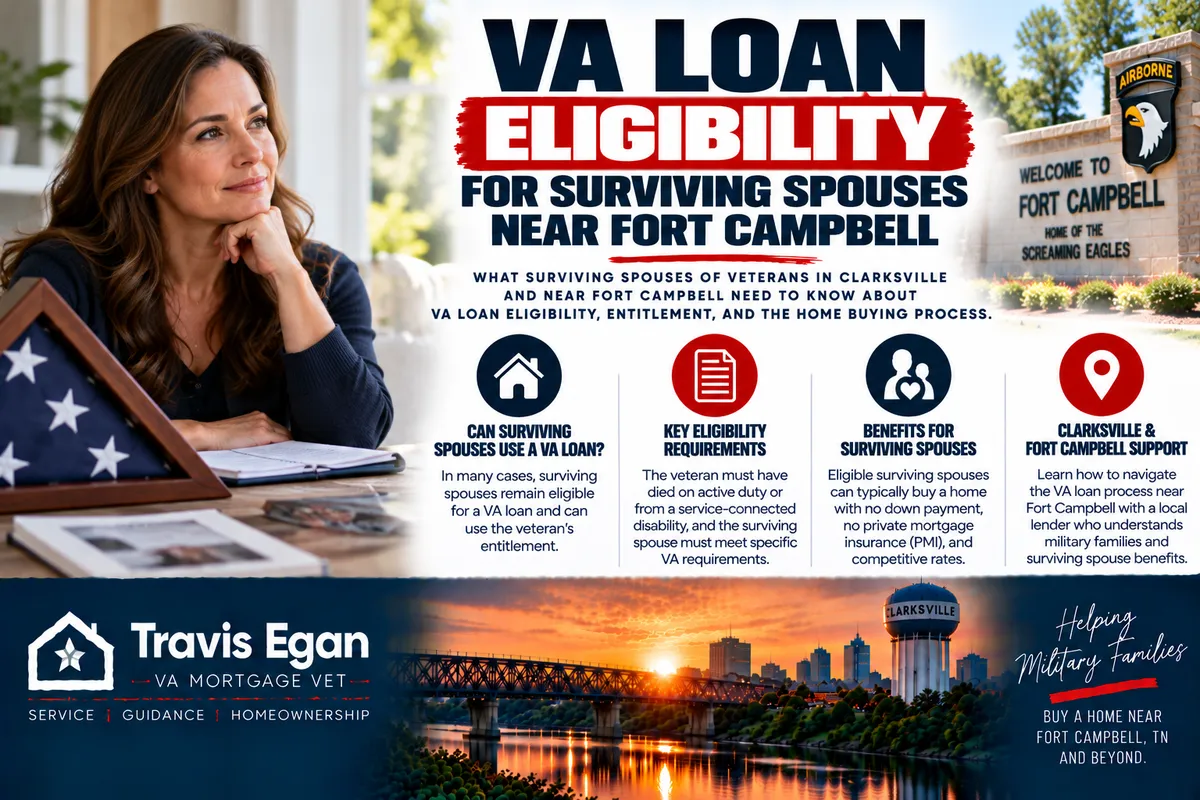
VA Loan Eligibility for Surviving Spouses Near Fort Campbell
A VA loan is one of the few mortgage benefits that can extend to a family member after a service member dies. For surviving spouses in the Fort Campbell and Clarksville area, that benefit can change the math on buying a home entirely, with no down payment required and no monthly mortgage insurance attached. The rules are specific, though, and the first step is not a loan application. It is a Certificate of Eligibility.
Here is how eligibility works, what the benefit actually covers, and the order of steps that keeps the process from stalling.
Who Counts as an Eligible Surviving Spouse
The VA backs home loans for surviving spouses of Veterans and service members, but not every spouse of a deceased Veteran qualifies. Eligibility turns on two connected ideas: your marital status and the way your spouse died.
Lending guidance summarizing VA rules describes eligibility for a surviving spouse who has not remarried and whose spouse died in the line of duty or from a service-connected disability. Both parts usually matter. A surviving spouse who has remarried typically falls outside the benefit, and a death unrelated to service generally does not create eligibility on its own.
The VA also publishes a broader set of circumstances in its Certificate of Eligibility criteria. One example the VA lists is a Veteran who is missing in action. Because the VA maintains that list and can update it, the reliable move is to read the VA's surviving spouse home loan page directly or ask a loan officer who works VA files before assuming you do or do not qualify.
What the VA Loan Offers a Surviving Spouse
The core benefit is the same loan guaranty the VA offers Veterans and service members. The VA's loan guaranty program helps Veterans, service members, and eligible surviving spouses become homeowners. For a qualifying surviving spouse, that guaranty offers several concrete advantages.
Benefit | What it means for a surviving spouse |
|---|---|
$0 down payment | Qualified borrowers can buy a VA-backed home with no down payment. |
No private mortgage insurance | No monthly PMI premium is added to the payment. |
Full VA funding fee exemption | Eligible surviving spouses are exempt from the funding fee other VA borrowers typically pay. |
Lifetime benefit | The benefit has no expiration date, so you decide the timing. |
The funding fee exemption is easy to overlook. Most VA borrowers pay a funding fee at closing, and this exemption removes that cost for eligible surviving spouses. The lack of mortgage insurance compounds over the life of the loan, since you carry no premium until a later refinance removes it.
The benefit also has no deadline. That matters for a family that needs time to settle an estate, decide whether to stay near Fort Campbell, or simply wait a year or two before buying.

The Certificate of Eligibility Comes First
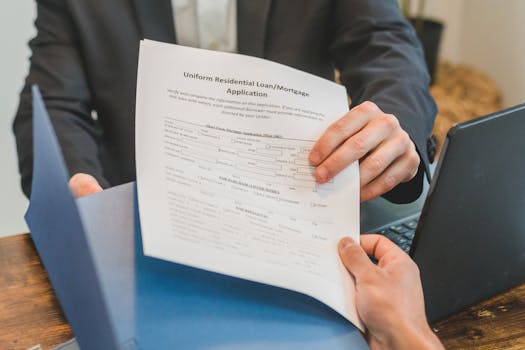
Before a lender can process a VA loan for a surviving spouse, the borrower needs a Certificate of Eligibility, usually called a COE. The COE tells the lender the borrower qualifies for the VA guaranty. Without it, the file cannot be underwritten as a VA loan, no matter how strong the rest of the application looks.
The VA's guidance is direct on sequence: surviving spouses must apply for a COE before applying for a VA-guaranteed home loan. Starting this step early is the most useful thing a surviving spouse can do, because it removes guesswork from every conversation that follows.
What the VA Reviews for a COE
The COE application is about your relationship to the Veteran and the Veteran's service record, not your income. The VA reviews the Veteran's service history, the circumstances of the death, and your marital status. Supporting documents typically include the marriage record and paperwork establishing the service-connected nature of the death.
Some files move quickly, and some require records that take weeks to obtain. If documentation is missing or the service history is complicated, the VA decides what it will accept. A loan officer can help organize the file and flag gaps before submission, but the VA makes the determination.
Lender Requirements Still Apply
A COE does not replace a lender's own review. The VA states plainly that a borrower must also meet the lender's credit and income requirements to get the loan. That means a credit review, income verification, asset documentation, and a property appraisal, the same as any other mortgage file.
This is where a surviving spouse's situation often needs extra attention. Household income may come from survivor benefits, a pension, Social Security, or employment, and each source has to be documented in a form the underwriter accepts. A lender that handles VA files routinely will know how to structure that documentation instead of requesting the same paperwork twice.
Steps to Take Near Fort Campbell
The order of operations matters more than most buyers expect. Following these steps in sequence keeps a purchase from stalling in underwriting.
Confirm the eligibility conditions on the VA's surviving spouse home loan page.
Apply for the Certificate of Eligibility first.
Gather the marriage record and service documents that support the application.
Talk with a VA-experienced loan officer about how credit and income will be documented.
Get pre-approved so you know your price range before touring homes.
Make an offer, complete the appraisal, and move to closing.
Around Fort Campbell, the housing decision often comes down to living on the Kentucky side of post or in Clarksville on the Tennessee side. A pre-approval makes that comparison concrete, since the monthly payment depends on the specific property and loan structure, not just the purchase price.
Remarriage and Other Changes
Remarriage is the most common question. Eligibility guidance generally ties the benefit to a surviving spouse who has not remarried, so a remarriage can affect access to the benefit. If your situation includes a remarriage, or a remarriage that later ended, get a direct answer from the VA rather than relying on a general rule of thumb.
Other questions that surface include whether an adult child can take over a parent's VA loan and whether any time limit applies to a spouse. The VA benefit itself carries no expiration date. Questions about assuming an existing loan or passing a property to heirs depend on the specific loan documents and the servicer's rules, so those answers are best confirmed with the VA and the current mortgage servicer.
If There Is Already a VA Loan on the Home
Some surviving spouses are not shopping for a new house at all. They are trying to keep the one they live in. The VA lists help surviving spouses avoid foreclosure, and the agency's housing assistance section covers both new loans and existing situations.
Beyond assumption, a surviving spouse may qualify for their own VA loan entitlement, which can be used to purchase or refinance a home. That matters when a family wants to refinance into a more workable payment or move to a different property without giving up access to the VA benefit.

Getting Local Help Near Fort Campbell
Travis Egan is a VA mortgage specialist and Marine Corps veteran based in Clarksville, serving military families, active-duty service members, and veterans connected to Fort Campbell. For a surviving spouse, working with someone who routinely handles VA files means knowing which documents to gather first, which questions go to the VA, and which go to the lender.
Documents first, COE second, pre-approval third. That order keeps the process moving, and it keeps a difficult season from turning into a stalled mortgage file.
Frequently Asked Questions
Can a surviving spouse get a VA loan?
Yes, surviving spouses may be eligible for a VA-backed home loan. Eligibility typically depends on not having remarried and on the spouse having died in the line of duty or from a service-connected disability. The VA also lists additional circumstances, so confirm your specific situation on the VA's surviving spouse home loan page before applying.
Why do I need a Certificate of Eligibility?
The Certificate of Eligibility tells your lender you qualify for the VA guaranty. The VA requires surviving spouses to obtain a COE before applying for a VA-guaranteed home loan. Without it, the lender cannot process the file as a VA loan, so this step comes before pre-approval and house hunting.
Do surviving spouses pay the VA funding fee?
Eligible surviving spouses receive a full exemption from the VA funding fee. Most VA borrowers pay that fee at closing, so the exemption removes a real cost from the transaction. The exemption applies to the eligible surviving spouse benefit and should be confirmed as part of your Certificate of Eligibility review with the VA.
Can a surviving spouse buy with no down payment?
Yes. Eligible surviving spouses can use a VA home loan with $0 down and no private mortgage insurance. The borrower still must meet lender credit and income requirements, and the property must appraise for the loan to close. The down payment is zero, but the lender still reviews the rest of the file.
Does the benefit expire?
No. The VA home loan benefit for eligible surviving spouses is a lifetime benefit with no expiration date. That gives a family room to handle estate matters and decide where to live without racing a deadline. Lender credit and income standards still apply when you apply for financing.
Missed the last post? VA Loan Assumptions in Tennessee: Can a Buyer Take Over Your Loan? For more on VA home loans.