
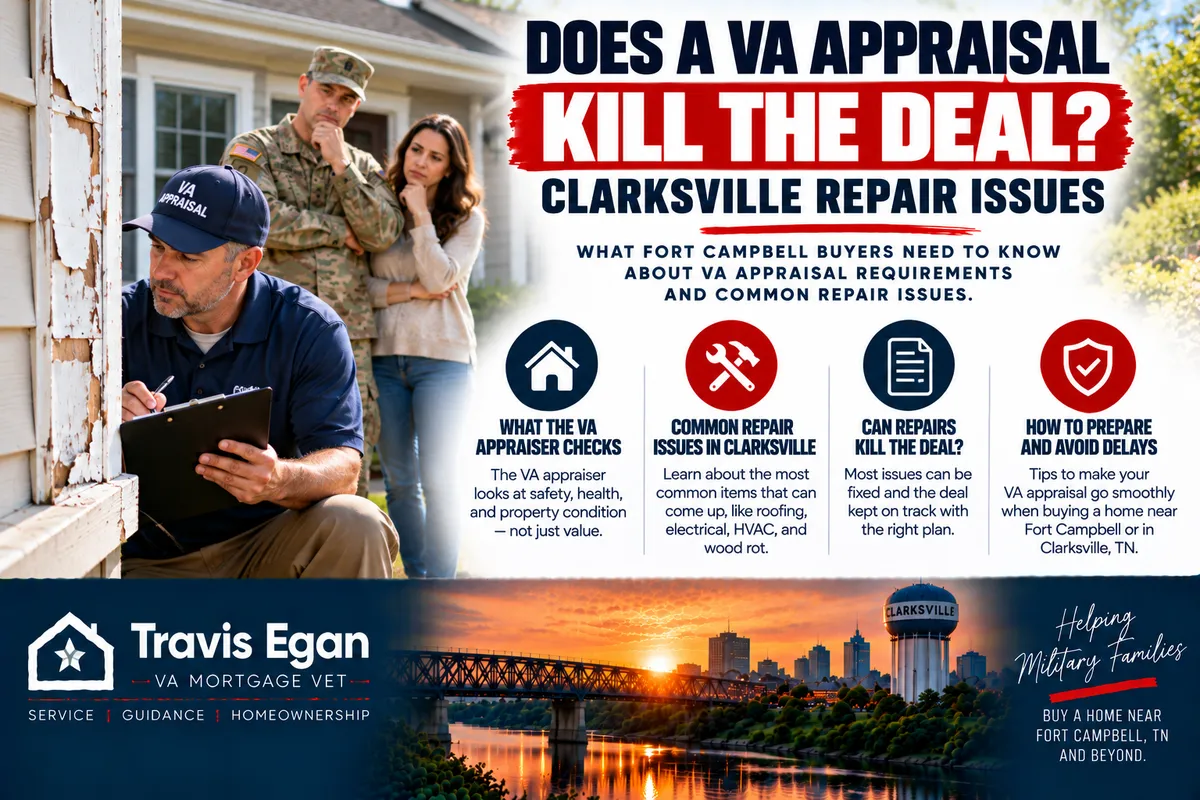
Does a VA Appraisal Kill the Deal? Clarksville Repair Issues
If a VA appraisal comes back with repair items, the deal does not automatically fall apart. More often, the appraiser flags conditions that need attention, and the transaction moves forward once those items are addressed. VA-required repairs may be listed in the appraisal as potential issues with the property that the appraiser feels need attention before closing.
For buyers using VA financing near Fort Campbell, that raises an understandable question. Will a repair list end the purchase, or is it just another step? The honest answer depends on what was flagged. Many of the items that show up are the same handful of conditions, again and again.
What the VA Appraisal Looks At Beyond Value
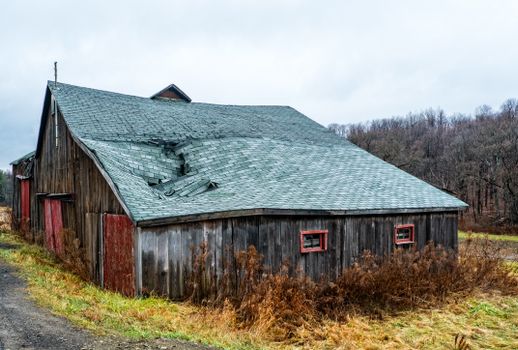
The VA appraisal is not only a value opinion. It also considers the home's condition, and the appraiser can report any damage or defects they observe. Roof condition gets particular attention. Appraisers carefully check for roof holes that could lead to leaks and other damage that can reduce the home's quality.
That matters because a repair item listed in the appraisal is not the same as a problem discovered after closing. A trained professional inspected it and determined the property needed to be addressed. The sources reviewed for this article describe those items as generally handled before closing, which is why they can feel like a hard deadline even when the sale itself is not in danger.
The Repair Issues That Come Up Most Often
Across the sources reviewed, a small set of conditions accounts for most of the conversation about VA appraisal repairs. They are rarely exotic, and they're usually visible from the driveway.
Condition | Where it usually shows up |
|---|---|
Chipping or peeling paint | Exterior trim, siding, and other exposed surfaces |
Defective paint on older homes | Older housing stock where paint has been failing |
Active roof leaks | Roof surface, flashing, and penetrations |
Roof holes | Roof covering and decking |
Broken windows | Window frames and glazing |
Missing rails | Stairs, porches, decks, and walkways |
Missing safety components | Railings and similar protective items |
Unsafe electrical items | Outlets, wiring, and exposed connections |
Peeling paint appears in more descriptions than any other item, and chipping paint is the recurring example in community discussions about appraisal-flagged repairs. Pre-purchase clues that can signal appraisal or repair issues include peeling paint, missing rails, and broken windows.
One caution here. None of these conditions guarantee automatic failure, and no official list of requirements appears in the sources reviewed for this article. Treat the table as a set of patterns to watch for rather than a checklist the VA publishes.
VA Appraisal Repairs Versus a Home Inspection
People often blend these two in conversation, but the sources reviewed describe them as separate subjects. Defective paint in older homes, unsafe electrical components, active roof leaks, broken windows, and missing safety components fall under the appraisal-repair side of that comparison.
The overlap is real, though. One buyer described a home inspection that revealed many problems the seller would have to repair before the VA would issue the loan, showing how inspection findings and VA-related repair items can point to the same defects.
The sources do not explain how the two processes differ procedurally or legally. Nothing reviewed here supports the assumption that an appraisal replaces a home inspection, and nothing supports the idea that a clean appraisal means the house is free of problems. Confirm the distinction with your lender and your real estate agent rather than assuming one covers the other.
Does a Repair List Actually Kill the Deal?
Usually not, based on how these situations are described. Appraisal-flagged repairs are generally handled before closing, with chipping and peeling paint as the most common example.
A transaction can end when a costly repair meets a seller who will not take it on. That is a negotiation problem more than an appraisal problem. Some deals fall apart over it. Many do not.
The sources reviewed here offer nothing on who pays for these repairs or what they cost, so don't assume a cost figure. Who covers what is specific to the contract and the negotiation. If you are the buyer, ask your agent to walk you through how your offer handles repair responsibility before you reach the appraisal stage, so there are no surprises later.
Keeping a PCS Move on Track
Military families working against a report date often see appraisal repairs as a scheduling problem more than a financial one. The sources reviewed provide no repair deadline or number of days allowed to complete repairs, so any timeline you hear about is specific to that transaction.
What you can control is preparation. If you are buying near Fort Campbell and your window is tight, factor in the possibility that the appraisal flags something. That means keeping room in your plans and staying in close contact with your lender and agent as the appraisal is ordered and returned.
Choosing a Home That Is Less Likely to Trigger Repairs
One of the more practical points in the sources reviewed is choosing the right property. You may avoid home repairs for a VA appraisal by choosing properties in good condition, because the appraiser may inspect damage and report it in the VA appraisal.
That puts more weight on the tour than many buyers expect. Walk the exterior and look up. Peeling paint, missing rails, and broken windows are signals worth noticing before you make an offer, and they often reappear on appraisal repair lists.
It also helps to consider the home's age. Defective paint on older homes is one of the conditions tied to appraisal repairs, and older housing stock is where deferred maintenance tends to hide.
Questions to Ask Before You Write an Offer
A few direct questions can surface repair risk early, while you still have room to negotiate or walk away.
Does the listing show any recent roof work, and is there evidence of an active leak?
Do any exterior surfaces have peeling or chipping paint?
Are railings and safety components present and intact?
Are there broken windows, or signs of water intrusion around them?
Do any electrical items look unsafe or unfinished?
None of these replaces an inspection or an appraisal. They are a first filter, not a verdict, and they are meant to help you decide where to spend your attention.
Where to Confirm the Details That Matter
No official guidance from the VA or HUD appears in the sources used for this article, and nothing Clarksville-specific about local appraisers, contractors, or local requirements was available. Your lender and the VA should provide the details that govern your loan.
The same goes for the parts of the process this article leaves open. Who pays for repairs, what they cost, and how long they take depend on your transaction and are outside what the reviewed sources cover. When a detail will affect your money or your move date, get it in writing from the people handling your file.
Frequently Asked Questions
Does a VA appraisal automatically kill a deal?
No. Appraisal-flagged repairs are generally described as items handled before closing rather than deal-enders. A transaction is more likely to fall apart when a costly repair comes up, and the two sides cannot agree on who will handle it. The appraisal surfaces the issue, and the negotiation decides the outcome.
What are the most common VA appraisal repair items?
Recurring issues across the sources reviewed include chipping and peeling paint, defective paint on older homes, active roof leaks, roof holes that could lead to leaks, broken windows, missing rails, missing safety components, and unsafe electrical items. Peeling paint comes up most often. No reviewed source provides an official or exhaustive list, so verify specifics with your lender.
Can I skip a home inspection if the VA appraisal is happening?
None of the sources reviewed support treating an appraisal as a replacement for an inspection. An appraisal considers value and condition, and it can flag repairs, but one buyer's case shows an inspection uncovering many problems that also had to be resolved before the loan would go through. Inspection findings and appraisal repair items can overlap. Keep them as separate steps.
Who pays for VA appraisal repairs?
The sources reviewed for this article do not establish who pays, and no cost figures were available. Repair responsibility is worked out between buyer and seller as part of the contract and the negotiation, and it varies from one transaction to the next. Ask your real estate agent to explain how it is handled in your specific offer.
How can a buyer avoid repair issues before the appraisal?
The sources reviewed point to property selection as the practical answer. Repairs may be avoidable by choosing homes that are in good condition, because the appraiser may inspect damage and report it. On tours, watch for peeling paint, missing rails, broken windows, active roof leaks, and unsafe electrical items. Those are the conditions that tend to appear in appraisal repair lists.
Missed the last post? What Documents Do I Need for a VA Loan When PCSing to Fort Campbell? For more on VA home loans.