
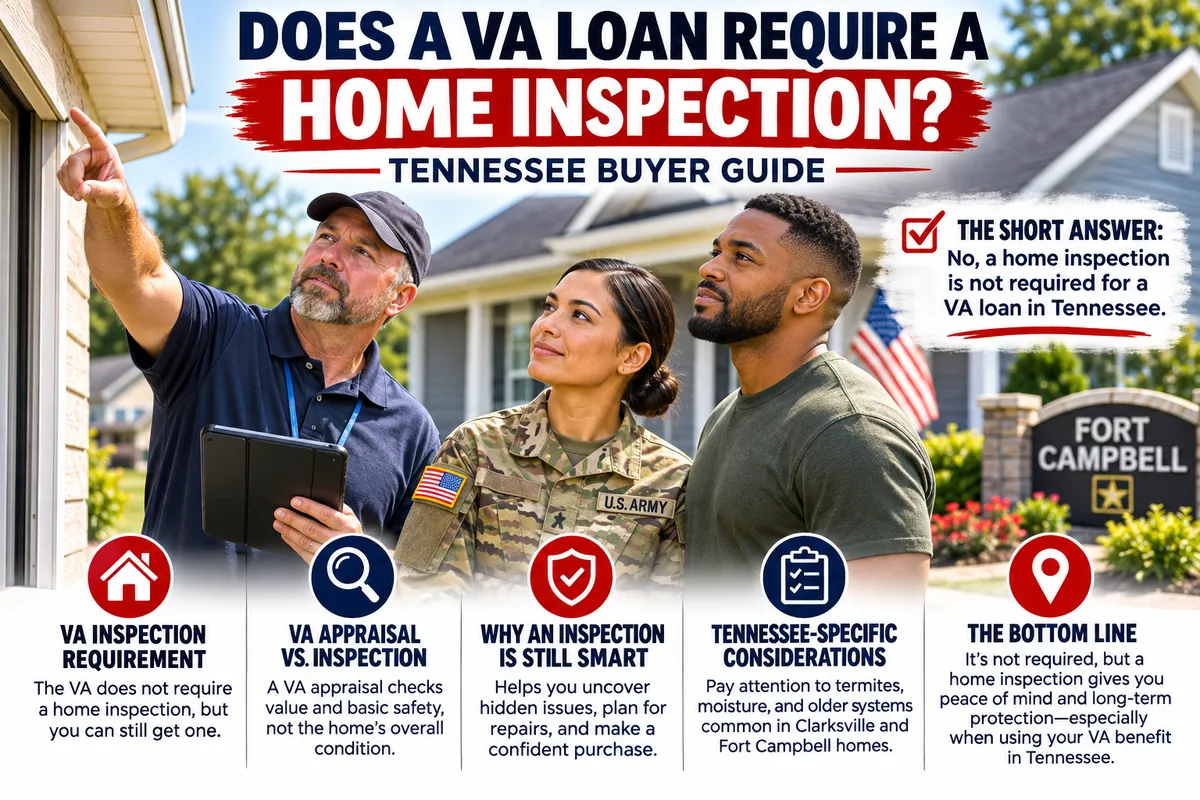
Does a VA Loan Require a Home Inspection? Tennessee Buyer Guide
A VA loan comes with a short list of truly mandatory requirements. An appraisal is on that list. A home inspection is not. That distinction causes more confusion during the contract period than almost anything else, especially for first-time buyers near Fort Campbell juggling a house search, a move date, and a pile of paperwork.
The honest answer is that the VA does not require a home inspection, and no rule forces you to order one. The VA does strongly recommend that you get one anyway. Understanding why those two statements sit side by side so comfortably will help you decide how to spend your money and how to protect yourself once you are under contract on a Tennessee home.
The Short Answer on VA Loan Inspection Requirements
According to VA guidance, inspection requirements aren't standardized across the program because the VA doesn't mandate a home inspection at all. The VA does require an appraisal, which determines whether a property is eligible for a VA-backed loan in the first place. No appraisal, no VA loan.
The confusion usually starts because people use the words inspection and appraisal as if they mean the same thing. They do not. An appraisal answers a lender's question about value and minimum property condition. An inspection answers a buyer's question about the house's true condition, from the roof to the crawl space to the electrical panel.
VA guidance to buyers is direct on this point: have the house inspected and appraised, and the VA strongly recommends an inspection to check for major defects before you purchase. That is a recommendation, not a condition of loan approval. You can close on a VA loan without ever ordering an inspection, and plenty of buyers do. Whether that is a smart move is a separate question.
VA Appraisal vs. Home Inspection: What Each One Does
The two services are performed by different people for different reasons. A VA appraiser is assigned through the VA process and works for the lender's benefit as much as yours. A home inspector is someone you choose and pay, and they work only for you.
Question | Home Inspection | VA Appraisal |
|---|---|---|
Required for a VA loan? | No, but highly recommended | Yes |
Primary purpose | Condition and safety for the buyer | Market value and VA minimum property standards |
Who it protects | The buyer | The lender and the VA loan guarantee |
Can it replace the other? | No | No |
That last row matters more than any other. A clean VA appraisal does not tell you the water heater is on its last winter or that the grading pushes water toward the foundation. A thorough inspection does not tell the lender the home is worth the purchase price. You need both answers, and only one is guaranteed.

Why the VA Requires an Appraisal
The VA appraisal exists because the VA is guaranteeing a portion of the loan. Before that guarantee attaches to a property, the VA wants to know two things: that the home is worth roughly what you agreed to pay, and that it meets basic safety and livability standards. Homes with certain condition problems may not meet those standards, and the appraiser can flag items that need attention before the loan moves forward.
This is why the appraisal is a hard requirement, and the inspection is not. The appraisal protects the government's interest in the loan. The inspection protects your interest in the house.
It is also worth separating the appraisal from your loan approval in general. The VA does not require a minimum credit score for the guaranty, but most lenders use credit scores to determine your interest rate and lower their own risk. Appraisal, credit, income, and service history all get reviewed on their own tracks, and a strong appraisal does not offset a weak file elsewhere.
What an Inspection Catches That an Appraisal Can Miss
Appraisers look at a home through a specific lens, and it's narrower than most buyers assume. They don't run every system in the house or predict what will fail next. A home inspection is built to do exactly that, and it typically covers areas that are easy to overlook during a quick showing.
Roof age and visible wear, including flashing and drainage points
Foundation cracks, settling, and signs of water intrusion
Electrical panels, wiring, and outlets that do not meet current expectations
Plumbing supply lines, drains, and water pressure
Heating and cooling equipment, including age and condition
Attic insulation, ventilation, and moisture evidence
Grading and drainage around the exterior
Windows, doors, and the seals that keep weather out
None of these items necessarily tank an appraisal. All of them can cost real money after closing. On a Fort Campbell purchase, where you may be working with a tight timeline between PCS orders and a closing date, discovering a failing HVAC system after you have the keys is far more expensive than discovering it while you still have negotiating room.
Why the VA Still Recommends an Inspection
The recommendation exists because the VA knows what its appraisal does not cover. VA guidance tells buyers plainly to have the house inspected and to look for major defects before purchasing. That language is not filler. It reflects the reality that the appraisal is a valuation and safety review, while the inspection is a condition review.
Buyers sometimes skip the inspection to strengthen an offer or to save money at the closing table. That can work in a competitive situation, but it trades a known small cost for an unknown large one. If you are weighing that tradeoff, ask yourself what you would do if the furnace failed in the first month. If the answer is that it would hurt, the inspection is worth scheduling.
How Clarksville and Fort Campbell Buyers Should Sequence It
Timing is the practical challenge. The appraisal is ordered through the loan process, and you arrange the inspection yourself, usually shortly after your offer is accepted. Getting both moving early keeps you from delaying your closing.
Confirm with your agent what your purchase contract says about inspections and deadlines.
Ask me when the appraisal will be ordered so you know the window you are working with.
Line up an inspector you trust and schedule the inspection as soon as the contract allows.
Attend the inspection if you can. Walking the property with the inspector teaches you things a report cannot.
Read the full report before your contingency deadline, not after.
Decide with your agent whether to ask for repairs, a credit, or to move forward as is.
If you are relocating and cannot be in Tennessee for the inspection, ask whether your inspector offers a walkthrough video or a detailed photo report. Remote buyers do this regularly, and it's better than buying sight unseen with no condition information at all.
What to Do If the Inspection Finds Problems
An inspection report on any house, new or old, will list something. The question is whether the findings are maintenance items, safety concerns, or genuinely expensive systems at the end of their life.
Your options depend on what your contract allows. If your purchase agreement includes an inspection contingency, you generally have a window to request repairs, ask for a seller credit, renegotiate, or walk away. If you waived that contingency, your leverage is limited to what the seller is willing to do voluntarily. This is why reading your contract before you fall in love with a house matters so much.
Separately, remember that the appraiser can also flag condition items that must be addressed for the loan to proceed. Those are not negotiable in the same way an inspection finding is. When both reports point at the same problem, that is a strong signal to take it seriously.

The Bottom Line for VA Buyers in Tennessee
The VA does not require a home inspection, and no one at the VA or your lender will force you to order one. The VA does require an appraisal, but it is not a substitute for an inspection. Buyers who understand the difference tend to make better decisions during the contract period, whether they are purchasing their first home near Fort Campbell or their third home after a PCS move.
My recommendation to every buyer I work with is simple: order the inspection. It is the cheapest insurance you will ever buy on the largest purchase of your life, and it gives you information while you still have options. If you want to talk through how the appraisal and inspection fit into your timeline, reach out and we can map it out before you make an offer.
Frequently Asked Questions
Does a VA loan require a home inspection?
No. The VA does not require a home inspection, and the program does not standardize inspection requirements because none are mandated. The VA does strongly recommend that buyers get an inspection to check for major defects before purchasing. You can close on a VA loan without one, but skipping it means you accept the home's condition without a professional review.
Is a VA appraisal the same thing as a home inspection?
No, and they can't replace each other. The VA appraisal determines the home's market value and confirms it meets VA safety and property standards, which is required for the loan. A home inspection evaluates the house's condition for you, the buyer. One protects the lender, the other protects you.
Can I skip the inspection to make my offer more competitive?
You can, but weigh the risk carefully. Waiving the inspection may help in a tight market, and it removes your ability to renegotiate over condition problems discovered later. Ask what a failed HVAC system or roof issue would cost you in the first year, then decide whether the saved inspection fee is worth that exposure.
Does the VA require a minimum credit score?
The VA itself does not require a minimum credit score for the loan guaranty. Most lenders use a credit score to determine your interest rate and reduce their risk, so scores still matter in practice. Ask your lender how your credit profile affects your rate before you start shopping for homes.
Can the seller be required to fix items found in the inspection?
Not automatically. Repairs tied to the appraisal's condition findings can affect whether the loan proceeds, but inspection findings are typically negotiable between you and the seller. What you can request depends on your purchase contract terms and their deadlines. Read that section before your inspection period ends.
Missed the last post? How Military Income Counts for a VA Loan. For more on VA home loans.