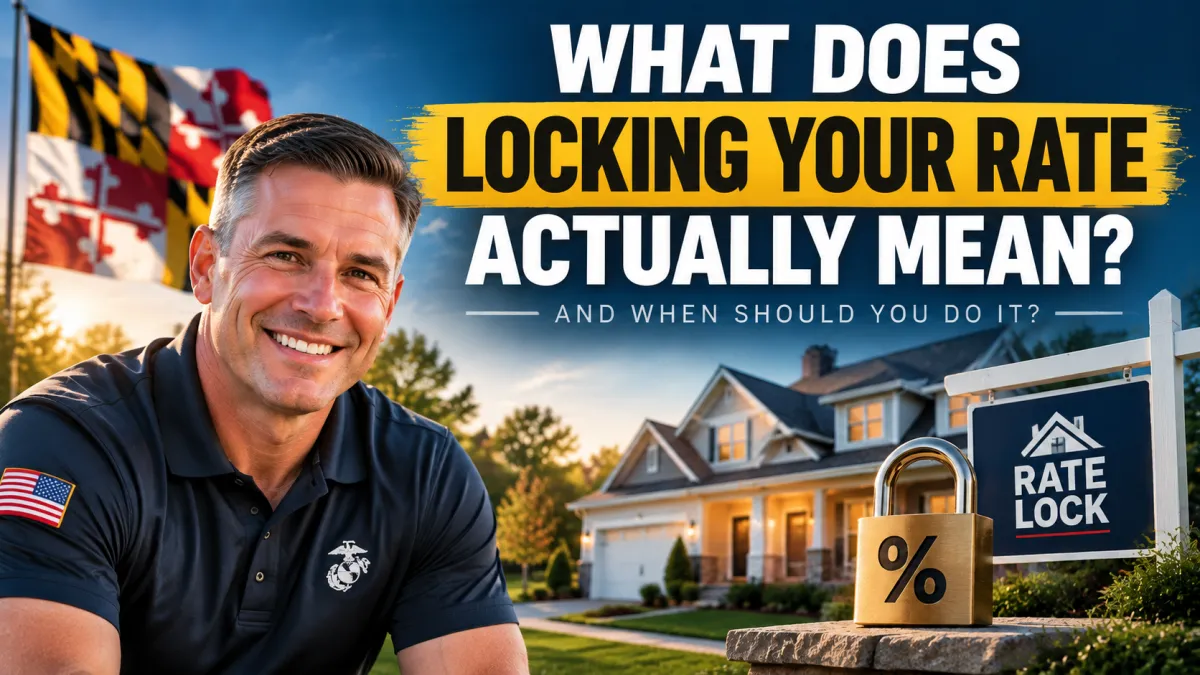
What Does Locking Your Mortgage Rate Actually Mean and When Should You Do It
The Rate Lock Question Every Buyer Should Understand Before They Need the Answer
What does it mean to lock your rate and when should you do it? It is one of the most practical questions in the mortgage process and one that buyers often do not think to ask until they are already in the middle of a transaction. Travis Egan walks every client through the timing decision based on where they are in the process because getting it right matters and getting it wrong has real consequences.
What a Rate Lock Actually Does
A rate lock is a commitment from the lender that guarantees your interest rate for a defined period of time regardless of what happens to rates in the broader market before you close. The typical lock window runs thirty to sixty days depending on the lender and the loan type involved.
During that window you are protected. If rates move higher your locked rate stays where it was when you locked. The market can do whatever it does and your payment calculation does not change.
Why the Timing Decision Is Not Trivial
Locking too early creates one kind of risk. If you lock well before your closing date and rates improve meaningfully during that window you are committed to the higher locked rate unless you pay to renegotiate or extend. You protected yourself against a rate increase that never happened and potentially missed a lower rate that did.
Locking too late creates the opposite risk. If you wait and hope rates improve but they move higher instead you are exposed to the market at exactly the wrong moment. A rate that felt negotiable when you were browsing listings can feel significantly different when closing is two weeks away and the rate has moved against you.
The right timing depends on where you are in the purchase process, how long until your anticipated closing date, what the rate environment looks like, and what your tolerance is for rate movement risk. Those factors combine differently for every transaction.
How Travis Egan Handles This With Every Client
Travis walks through the rate lock timing conversation individually based on the specific situation rather than applying a generic rule. The thirty-day lock that makes perfect sense for a client who is two weeks from closing is a different conversation than the sixty-day lock discussion for a buyer who just went under contract on a new construction home.
Got questions about your rate lock timing or anything else in the VA loan process? DM Travis Egan directly. He is here to help. Semper Fi.
Sources
VA.gov
ConsumerFinancialProtectionBureau.gov
MortgageNewsDaily.com
FannieMae.com
Investopedia.com